The Craft of Audio Mixing for Commercials: What Really Matters
Why Commercial Mixing Is Different
When I first started working in audio post, I thought mixing a thirty-second commercial would be easier than mixing a film. You have less time, fewer tracks, simpler music. That assumption lasted about one session. The truth is, audio mixing for commercials demands a different skill set entirely. You are not just balancing levels. You are telling a complete story in seconds, often under the weight of client notes, brand guidelines, and a playback environment you cannot control.
In a film mix, you have time to build atmosphere, let a scene breathe, use silence as a tool. In a commercial, every frame is precious. The mix has to hit hard and fast. The voiceover must cut through a busy soundscape without sounding forced. The music needs to support without competing. And the sound design has to land a feeling or a joke in under two seconds. This is where experience separates a usable mix from a memorable one.
Over the years, I have learned that audio mixing for commercials is less about technical tricks and more about understanding what the listener needs to hear. The best mixes sound effortless. But getting there requires a clear process, good ears, and a few reliable tools.
Start with the Voiceover
In most commercials, the voiceover is the anchor. It carries the message. Everything else works around it. So I always start there. I record at a comfortable level, usually leaving headroom for later compression. Depending on the read, I might add a little equalization to bring out presence without making the voice sound thin. A high-pass filter around 80 Hz cleans up rumble. A gentle boost around 3 kHz can help the voice sit above the music.

I rely heavily on iZotope RX for cleaning up breaths, mouth clicks, and background noise. It is not a magic fix, but it saves hours of manual editing. For compression, I keep it subtle. Over-compressing a voiceover makes it sound small and fatiguing. I aim for a reduction of three to five dB on peaks, enough to smooth the track without killing its natural dynamics. The goal is a voice that feels present and honest, even when the script is selling something.
Building the Soundscape
Sound design in commercials is often minimal but deliberate. A whoosh, a click, a subtle texture can define the tone. I build these elements in Pro Tools, my DAW of choice. The editing workflow there is fast, and the automation tools let me shape details precisely. I use FabFilter plugins for equalization and dynamic control because they sound clean and their visual feedback helps me see what I am hearing.
One thing I have learned is that less is usually more. A single well-chosen sound effect, placed at the right moment, does more than a layer of random hits. I spend time on the ADSR envelope of each sound, adjusting attack and release so it lands naturally with the edit. A sound that starts too late or fades too slowly can throw off the timing of a whole spot.
Music and Mixing Balance
Music in commercials often comes pre-mixed, but it rarely fits the spot perfectly out of the box. I use equalization to carve space for the voice. A dip around 2 to 4 kHz in the music track can make the voiceover pop without raising its level. Compression on the music bus, sidechained to the voice, is another common trick. But I use it sparingly. Heavy sidechain pumping sounds dated and distracts from the message.
Reverb is another area where restraint wins. A short room reverb on the voice can add warmth, but too much push creates distance. I prefer a mono or early-reflection reverb that keeps the voice centered and close. For music and effects, a stereo reverb adds space without washing out the mix. I often use a Neumann microphone for voiceover sessions when I have the choice. It captures detail without harshness, which means less processing later.
Monitoring and Room Acoustics
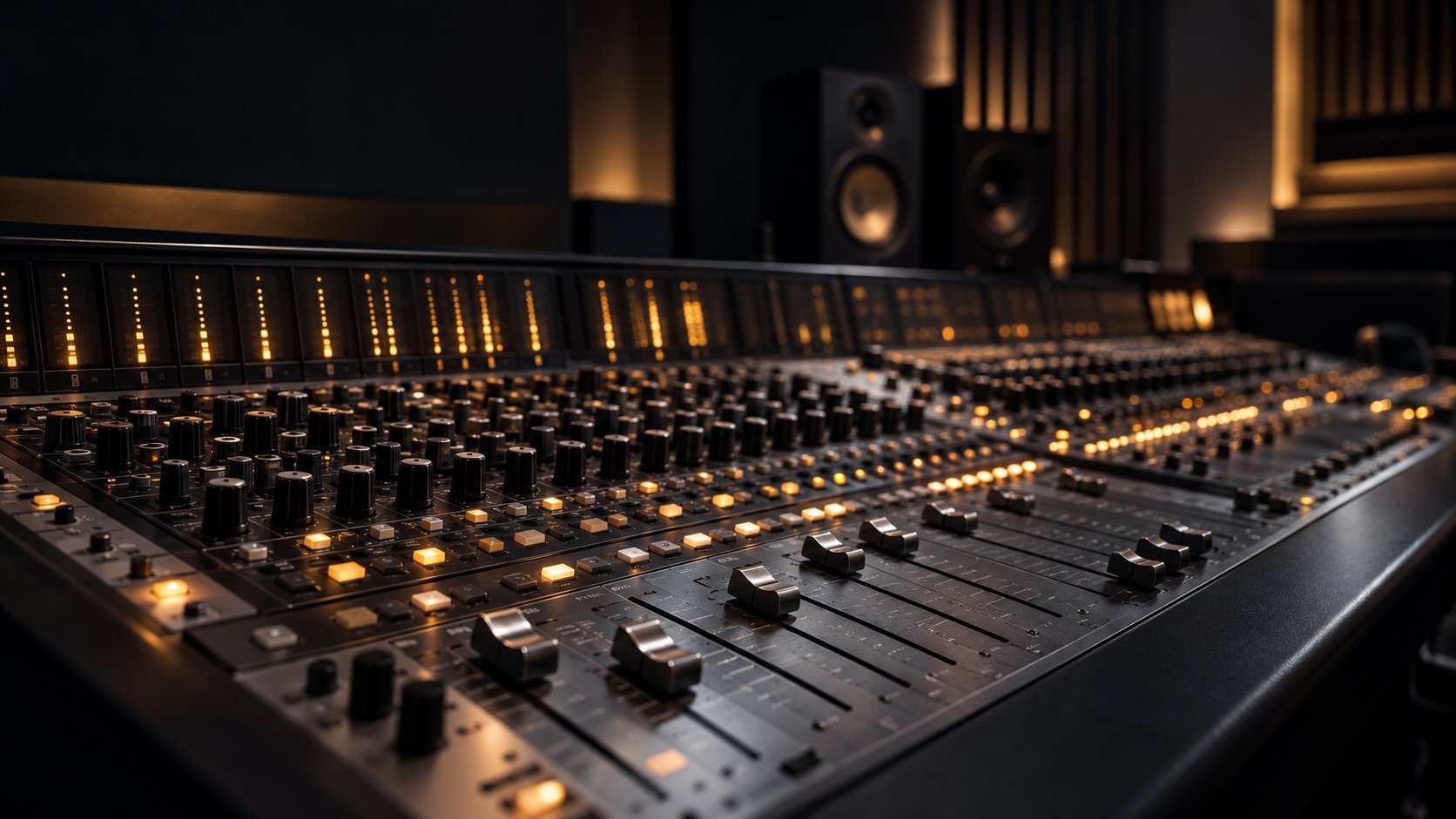
You cannot mix what you cannot hear. My monitoring setup includes Genelec speakers, which give me a flat, honest picture of the mix. I also check on a pair of Neumann headphones to catch any issues in the low end or stereo image. The room itself is treated to avoid early reflections and standing waves. Even the best mixing console cannot fix a room that lies to you.
I keep a small subwoofer in the chain to check low-frequency content. Commercials often play through TV speakers or phone speakers, so I make sure the mix translates. I test on cheap earbuds, laptop speakers, and a car stereo before I call it done. If it sounds good on all of them, it is ready.
Stem Mastering and Delivery
Once the mix is balanced, I move to stem mastering. This is where I prepare separate stems for voice, music, and effects. Many broadcasters require them for compliance and flexibility. I export at 48 kHz, 24-bit, with a loudness target around -24 LUFS, as per ATSC A/85 standards. I use iZotope RX and sometimes FabFilter Pro-L 2 for limiting, but I keep the loudness consistent across the whole spot.
Dolby Atmos is becoming more common in commercial work, especially for brands that want an immersive experience. Mixing in Atmos adds complexity, but it also opens creative possibilities. I have delivered a few Atmos commercials for streaming platforms. The process is similar, but you have to think about object placement and bed channels. It is still early days, but the shift is real.
Tools of the Trade
I buy most of my gear from Sweetwater, partly for the service and partly because they stock the brands I trust. A good audio interface, a reliable DAW, and clean converters matter more than any one plugin. I use Avid Pro Tools as my primary DAW, but I also keep Ableton Live for sound design sessions when I need to loop or process sounds quickly.

Staying Current
The industry changes fast. I attend AES conventions and NAB Show whenever I can. These events are good for hearing new gear and talking to other engineers. But the real learning happens in the room, listening to what works and what does not. Sonic branding is a growing field, and more agencies are asking for mixes that reflect a brand's identity, not just a spot's message. That means the mix has to feel like the brand, not just sound clean.
Final Thoughts
Audio mixing for commercials is a craft of subtraction. You take away until only the essential remains. Every element has to earn its place. If the voice is clear, the music supports, and the sound design lands, you have done your job. The rest is just practice, good tools, and honest monitoring. There is no shortcut, but there is a reliable path. Follow it, and you will deliver mixes that work for the listener, the client, and the brand.